Wednesday, July 9, 2008

Here comes the bride, again, 25 years later


July 9, 2008
Maun

Gerald and Lally Warren will celebrate their 26th wedding anniversary in August, but, as Gerald told guests in Lobatse on Sunday, they are “still in their honeymoon phase.”

Was my interminable bus ride to attend their 25th wedding anniversary party worth it? You bet it was.

If the uploading on the blog works, you’ll see photos of Lally in a blue shawl and later in her wedding dress, and you’ll see the bride and groom kissing. You’ll see the traditional dancers from the village of Kanye and the Indian neighbors who performed a lovers’ dance as a gift to the couple. The baby is a cheerful friend I made at the party. Her name is Goone – “unto Him” or “unto the one” is the meaning. I wanted to take her home with me, but I had to settle for tending her an hour.

How is it that a couple can stay together more than 25 years anywhere on the globe in this era and in Botswana, where many people opt never to marry at all but insist on having children together? Gerald and Lally say it’s about finding the right person who is, above all, a friend and a spiritual companion, and, according to Lally, it’s about being “a professional coward.” She said neither she nor Gerald would dare make a big decision without consulting the other. That’s not always the case in Botswana, she told guests. Some women find a stranger at the door to announce he is the new owner of her house; the woman’s husband has decided to sell the house and it is news to her.

The anniversary celebration was a tribute to traditions in the Botswana culture and a plea for transformation, to a world in which men and women will be viewed equally and where the Batswana tradition of honoring marriage between one man and one woman for life can be renewed. Gender equality is after all a major tenet of Gerald and Lally’s Baha’i faith. The ceremony was filled with Baha’i prayers and blessings.

Their party first was a re-enactment of a traditional Botswana courtship and wedding. I found myself in the middle of the festivities as one of the actors. Women were chosen to be Gerald’s family, I among them. We wrapped ourselves in shawls under an unforgiving sun. (I must have looked awfully odd with my khaki safari hat pulled below my eyebrows and my cashmere paisley-print shawl from Provence draped around my shoulders. Talk about sweating.)

We had to travel beyond the gates to the house to find Gerald and the men sitting in a kgotla, a circle of democracy and decision-making. The bride was inside the red-brick house. One of the women in my line ululated, and there was a lot of that going on throughout the ceremony. But I don’t know how to do it: Somehow you make a high-pitched sound, vibrating your tongue back and forth as you shriek. I did the usual: I marched in step and kept my mouth shut. It had worked for me during the choir performances at the camps in the bush. It would work for me now.

We greeted the groom, who in theory was negotiating how many cattle would be given as a gift to Lally’s “family” in appreciation for the bride. During the ceremony, Gerald and Lally would stress that the “bride appreciation” has changed for the worse over time; too many young people use it as an excuse not to get married. They complain they don’t have the money or cattle to afford to marry. The anniversary celebration set the record straight: The bride appreciation, as it was in the days of old, can be a promise of cattle (or money) to be paid at any time during the marriage. The important thing is that two people love each other and have their parents’ blessing for the union.

We marched back into the courtyard to “meet” the bride’s “family.” We sat on the driveway on animal skins across from the women of the bride’s family. There was ululating as if in conversation across the divide, while we waited for the bride to come out of the house. This seemed to take a very long time. Or maybe it was the fact I was wearing a shawl in noonday sunshine.

We were told we must sit with our legs straight in front of us. Uh oh. That’s a pose we’re not used to holding for very long in the U.S. unless it’s in yoga class. I slumped. I leaned. I practically fell over on my side. Meanwhile, much older women sat primly, posture upright, legs straight in front, hands clasped in laps. (It reminded me how 15 years ago I had failed to sit still or primly in Korea at dinner tables low to the ground. My legs proved too long to fit anywhere, and I had trouble managing to sit cross-legged for more than 10 minutes at the same time I was fully concentrating on how not to fumble my stainless steel chopsticks and send them flying like missiles at my dinner companions.

“You have VERY long legs!” a little Korean boy announced to me in awe one night in Taegu. I guess that’s why I ended up in Korean strangers’ home videos as the giant big-boned gal come to town.) This straight-legged African seating was even more difficult.

But we managed. Lally came out wearing her blue shawl. Abandoning her air of confidence as a nurse and midwife in her usual life, she sat shyly, like a schoolgirl, in the place of honor. A representative set off to bring the groom. The groom’s group marched into the courtyard, and there were greetings all around, and an announcement that the bride appreciation was 20,000 Pula. Much hoopla! That’s a pretty penny and not a shabby offering from a retired primary school math teacher.

We all disbanded to move to our white plastic chairs. Relief. While traditional dancers and singers from the village of Kanye performed, Lally went into the house to transform herself into a bride in full white “goddess” gown with a pearl headpiece to top it off. One of the great moments of the day was when she was escorted from the door of her house like the leader of a parade, the traditional dancers marching behind with their ankle shells rattling. We guests loved it, and we celebrants were indeed a rainbow crew: Lally and Gerald’s three children and grandchildren; local Lobatse people, rich and poor; white Africans who drove up from South Africa for the day; a mixed-race couple from Gaborone who used to live in Atlanta when he worked at the headquarters for the Centers for Disease Control and Prevention; farmers and physicians alike. We all were witnesses to ritual and renewal.
And like any good ritual, the buffet food awaited and abounded: seswaa (Botswana barbecue), butternut, morogo (greens), pap, samp, salad, maize. I’m probably forgetting something. And we drank ginger beer from a big trash can, and lest you think otherwise, there is no beer in ginger beer. It’s nonalcoholic and delicious in a snappy way. (Baha’is don’t drink alcohol.)

I came away once again honored to know Gerald and Lally and grateful to my artist friend, Mary Jane, in Florida for making sure we were introduced in March. I know more about the culture of Botswana and the secrets of sustaining a marriage than I did a few days ago. Not a bad lesson in any culture and an invaluable reward for a roadtrip.

And how did I return to Maun?
As my friend, Kitso, a guide on time off from Xugana Island Lodge, said to me in a text message by cell phone, “U HAVE 2 B TOUGH 2 B A MOTSWANA LADY.” He was referring to my impatience in the art of bus riding. He messaged me “GUD” when I made it to Lobatse.

On Monday, I sent Kitso an SMS on my cell phone, “AM NOT TOUGH ENOUGH. TOOK PLANE BACK 2 MAUN 2DAY. HAPPY DAY! NO BUS 4 ME 2DAY.”

I am certainly no expert in marriage, but I think I got the overview of long-distance bus riding, along with a few tips: Don’t buy the fried chicken and chips (French fries) the hawkers try to sell you when the bus makes its quick stops. The chicken was probably cooked a day or two before and then rewarmed to release the redolent eau de grease. I didn’t make that mistake, thanks to my seatmate from Zambia’s warning. Truth is, I’m not tough enough to even consider trying the chicken from those corrugated roadside stalls. But I like to think I am.

Sunday, July 6, 2008

Home & Garden notes

How do you dress up a three-star hotel room that has a bug crawling toward your suitcase and the remains of a squashed mosquito smudged above your headboard?
My solution: Tear the stem from a climbing rose bush that holds two perfect white flowers. Place them in the water glass beside your twin bed, the lumpy one that has the sketchy bedspread you don't want to touch.
Now, examine the perfect papery whiteness of the petals and smell the fragrance.
The room feels better already.
Instant interior decoration with a hint of interior illumination.

Saturday, July 5, 2008

Seemed like a good idea at the time...

I have just arrived at the Cumberland Hotel in Lobatse, Botswana, home to the country's high court and mental hospital, separately, of course. I've checked into neither one. But I ought to have my head examined.

My friends I met here in March, Gerald and Lally Warren, invited me then and renewed the invitation last week for me to attend their 25th wedding anniversary. It would be a traditional Batswana celebration, with seswaa, pap, morogo, dancing and singing. I thought in March I should come and when I heard from Lally last week I was sure I shouldn't miss it. (Read about Gerald and Lally around March 17th on my blog.) I have just moved into my cottage in Maun and still have no wheels. What the heck, I thought. I will travel as Batswana travel -- by big fat bus. I didn't do much planning, just got a notion to head West, skirting the Kalahari to Ghanzi, then south to Lobatse and come around on the eastern side through Francistown back to Maun.
If you've ever seen a Botswana bus stop, you won't mistake it for Switzerland or Germany, that's for sure. It's chaos with buses coming and going and no centralized information about what leaves when. You ask around and hope you climb onto the right bus, and if it's not too much to ask you hope it's clean.

I got dropped off at the bus stop and to my dismay the Ghanzi bus was broken down. One man was telling me I could take another bus to the northern delta, get dropped off on the side of the road and get picked up by another one. No way! I envisioned standing under the searing sun with no one passing me by and certainly no hotel within walking distance. I jumped on a bus to Francistown.
It seemed like a good idea.

I was lucky and got a front seat in the aisle beside Bone (pronounced Bona and translated "them"), who got quite a kick out of me. I thought the fare was 20 pula; it was 70. I asked about where we might stop to go to the restroom along the way and she and the other seatmate fell over laughing. To the bush, was the answer. And so the traveling began. Whenever the bus would lurch, my seat cushion and I would go flying. The seat must have been torn from the frame oh about 15 years ago, I'd say. We would slow down for donkeys, cattle and goats. We kept picking up people on the way and depositing them. This is fun, I thought. I can see the country. Trouble is, the country looks pretty much the same for hours and hours and hours. I did practice my Setswana for a while, then read an "Oprah" magazine I got at the local supermarket in Maun.
I set it down for a minute to let someone pass and across the aisle a woman starting talking Setswana to me and laughing. When I didn't understand, she translated. The gist: Hey, I'm an elder and in this country elders get some respect, so can you let me borrow your magazine?
OK

I made it to Francistown after 6 hours on the bus. Lunch was a whole packet of vanilla cremes and I mean a big packet (think nigh on Keebler size), potato chips and a coke. What can you do? It was either that or french fries, rice and some weird looking meat to top it off, all of this from a truck stop. Forget the healthy living on a roadtrip around these parts. The thing about Francistown is that I had hardly stepped from the bus and asked directions when a handsome man in a security uniform decided to escort me to my hotel. He went into the usual M.O. among Botswana people: They want to know about my husband and my children. Without any, I am quite the object of curiosity, if not outright pity. This fellow was perplexed but undaunted. He insisted that he could be my Botswana boyfriend, and if not my Botswana boyfriend, my Francistown boyfriend. I sent him on his way. Wish I hadn't so soon, because I needed him in the grocery store when I was buying water and FRUIT. A woman in a black beret I noticed was awfully close. When I walked to the magazines, she walked behind me. When I went to the dairy counter, there she was again. I tested my theory, moving hither and yon and a clipped pace.
I whipped around and faced her. "What are you doing?!" I hissed.
She was shocked. "Uh, I was short 2 Pula," she said.
Right.
I waved her away and watched my back the whole way to the hotel.

The bad news is that I had to get on a bus again: this morning for a 5 1/2 hour bus ride to Gaborone, and on this bus they packed 'em in so tight that they were standing in the aisle. For miles I had a standing passenger's pink plastic pocketbook gouging me in the back of the head. At least I had a nice man from Zambia beside me. We had to stop at one point and exit the bus to show our passports and IDs. The police hauled away two guys and placed them in handcuffs. I'm guessing they were from Zimbabwe. Many are trying to seek refuge here, as you would expect, and the government wants to stop the influx. Francistown, only about one hour from the border, is one of those main entry points.

By the time I got to the bus stop in Gaborone, I'd had enough. I called Ernest, the trusty taxi driver who used to take me to my work at the University of Botswana. Would he take me to Lobatse? "Sharp. Sharp," he said. And so I am here, finally. When the sign said drive 50, Ernest drove 120. I know he was in a hurry to be at home "and just chill," as he puts it.
You can imagine that I'm already hatching a plan to catch that 8 a.m. flight from Gaborone to Maun if there is any seat for me and if there is any way under the sun to avoid another 13-14 hours on the bus and two nights in pricey hotels that are anything but posh. (This one has a lavender sink and toilet and truly ancient linoleum. Its rating? 3 stars.) Even the thrill of authentic experience has its limits.
But I did appreciate Bone's exclamation to me somewhere between Maun and Nata.
"You are living life to the fullest!"
That I am.

Thursday, July 3, 2008

An African bedtime story


At Camp Okavango and Xugana Island Lodge, guests find a different laminated bedtime story waiting for them each evening. One of the directors of Desert & Delta asked me whether I might write one, and I did, based on an interview with legendary guide John Odumetse Kata at Camp Okavango. (You can read the piece I wrote about him at www.desertdelta.blogspot.com)
But here's the bedtime story and a photo of John. He's the one wearing the green-striped socks. He's sitting beside Section, a tracker, poler and groundsman who carves tiny mokoros sold as keychains. He gave me one as a going-away gift. I'm going to hang it on my Christmas tree.

THE STORY OF THE LION AND THE HARE

Tau was a lion in the Okavango Delta. He prided himself on being the king of beasts.

“I am the king,” he said. “No one hunts better than I. No one has more meat in the stewpot than I do. I am the best.”

When dinnertime came, he paraded around his stewpot, inspecting the meat. There’s a nice, fat, juicy piece for me, he thought. And there’s another. And another. Mmmm! It’s good to be king.

All of the other animals gathered around and waited to be served. After all, they had helped in the hunt, and they were all neighbors. But when their time came to eat, Tau gave them only the tiniest pieces that had no fat. He didn’t really want to share. He didn’t really like to share. He handed out the worst pieces, and only begrudgingly, to his animal neighbors of the delta.

This upset the animals, particularly a hare named Mmutla.

“There must be a way to have a better dinner than this,” Mmutla said in dismay. Night after night, it had always been the same. Tau got the best. They got hardly anything at all, mostly gristle.

Mmutla thought a while. Then he gathered all of the animals, except Tau, and made a plan. They whispered well into the next day.

“Tau,” Mmutla said, “come here and let us groom you. You’ve had a hard day being king. We’ll pick the lice from your tail so you will sleep well tomorrow.”

They lured him to a tree near the stewpot.

“Tap! Tap! Tap!” came the sounds.

“Hey, Mmutla, you are hurting me,” Tau said gruffly. Tau was bothered but gazing so proudly at his stew that he never even turned around to look at the animals.

Mmutla said, “Sorry, brother. These lice are huge, and there are many. We will keep working.”

Tau grumbled and roared but allowed them to continue.

After some time Mmutla and the other animals were finished. They rubbed their paws and claws with satisfaction. Mmutla led a parade to the stewpot, right in front of Tau’s nose but far enough away for safety.

Mmutla reached into the pot and grabbed the thickest, fattest piece of meat and dangled it before Tau.

“Hey! What are you doing?” Tau roared.

“I am going to eat this one, brother!” Mmutla said with a smile. And he did.

Tau lunged in fury. But he didn’t get far. In a brilliant stroke of teamwork, the animals had nailed Tau’s tail to a tree. Too bad for Tau, but he had it coming.

All of the animals ate well that night, except Tau. He gnawed on the tiniest piece of meat, the one without any fat. And so Tau went to sleep hungry and feeling less than kingly. The animals went to sleep fat and happy.

“Robale sentle,” they whispered. From the delta their wishes abounded: Sleep well.

****

This is a modern adaptation of a story that
John Odumetse Kata said his grandmother, Maxaao, told him when he was a boy growing up on the islands of the Okavango Delta in Botswana. The legendary veteran guide at Camp Okavango for 28 years didn’t have schools when he was growing up. As a river bushman of the ethnic Bayeyi tribe, John Kata learned his lessons beside the campfire. The stories that the grandparents -- especially grandmothers—shared often had morals for the children’s education.

“The main point is sharing and that cooperation is always the most important thing in families,” John Kata said in recalling his grandmother Maxaao’s tale of the lion and the hare.


The best guess is that John Kata was born in 1944 on what is now known as the famous Chief’s Island. His clan moved among the islands in search of food and fish. They lived in makeshift reed huts, at each new location near a big shade tree.

Today John Kata leads Camp Okavango’s guests on walks where his villages once stood and where his tribe’s storytelling echoed around campfires into the night.

---Maria Henson

Wednesday, July 2, 2008

Not in my own words


I took the photo at Xugana Island Lodge, where I moved to my assistant lodge manager assignment in the Okavango Delta in June.


I'll be struggling for a while to try to describe what it was like living with Botswana camp workers in an amazing wilderness for three months. I miss it already. For now, I'll share with you something I read from a dusty book tucked away in "Jessie's Suite" at Camp Okavango. (Jessie was the eccentric billionairess who collected pilots' toothbrushes, if you get my drift. Her suite has a notable array of mirrored walls and black tiles, although apparently fewer than when she lived there, and that's saying something.)

This is from Venture to the Interior by Laurens van der Post:
It is one of the more unjustifiable pretensions of our age that it measures time and experience by the clock. There are obviously a host of considerations and values which a clock cannot possibly measure. There is, above all, the fact that time spent on a journey, particularly on a journey which sets in motion the abiding symbolism of our natures, is different from the time devoured at such a terrifying speed in the daily routine of what is accepted, with such curious complacency, as our normal lives. This seems axiomatic to me; the truer the moment and the greater its content of reality the slower the swing of the universal pendulum.
*****

....Van Der Post loved Africa and filmed and wrote books about the Kalahari and its bushmen. This book, published in the early 1950s, is about one of his many journeys to Africa.
He opens it with this:

We carry with us the wonders
We seek without us: there is all
Africa and her prodigies in us. --Sir Thomas Browne

She can dance but don't let her sing....


It is an interminable process to try to get photos uploaded on this blog. I'd like to show you more, but the clock and the pula tick away while I wait. But I wanted to show you some photos of one of my going-away moments: one with the staff choir at Camp Okavango. They sent me off with a rousing rendition of "Mma Pula naledi," which I was told meant that Ms. Rain (my nickname translated from Mma Pula) is a shining star." Another is on a boat from Xugana Island Lodge going back to Camp Okavango to pick up a staff member. The tent is my home at Camp Okavango. The other is Pilot One, my side of a little building near the office. I lived there. A lesser-tailed swallow built a nest right above my door, and I visited her every morning.

What I did on my career break....


By popular demand I am going to provide you with first a photo of my roommate in my staff room at Savute Marsh, second a black mamba found on the lawn (one of six I saw in 3 weeks) and third a picture that one must say "doesn't belong." Those cuties I saw at Camp Moremi two weekends ago.

I am already missing the remote bush life, but I am settling into my little cottage on the Boro River. I heard the screeeeeech of a resident barn owl last night and the pitter patter on the roof of what we would fondly call "tree mice," when in fact they might be rats. I'd rather not know....If you have never seen a barn owl, it's worth looking it up. I saw one that was sitting in a tree at Savute Lodge, and it was one of my most memorable moments. What a gorgeous creature!

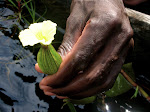
A magical flower

A magical flower
The guide squeezes this flower and it squirts water like a water pistol

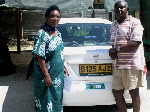
Cathy and Joe Wanzala

Cathy and Joe Wanzala
They couldn't wait to paste the Obama sticker on their car

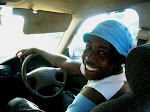
My main man

My main man
Ernest is my trusty cab driver who blasts music as we make our way through Gabs

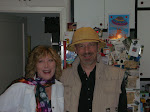
Ted Thomas, man of intrigue and style

Ted Thomas, man of intrigue and style
My friend, Ted, and his wife, Mary Ann, hosted a Safari Send-Off for me in Austin and treated me to a special mix of African music that already a UB student and a professor want to download.