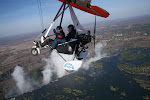
On Saturday, my hosts Cathy and Joe Wanzala wanted to say goodbye to their friends, George and Jackie, who are moving back to Tanzania. We drove a while and turned into the official Botswana wildlife training camp. Imagine how thrilled I was! Here was the place that trains and certifies the guides who go into the bush with tourists -- like the Harvard of wildlife training.
It turns out that George has been teaching there for 15 years! He appears very young to be an Obi Wan Kenobe (spelling??) type, but he clearly knows his stuff. Poor thing. I pestered him like a 2-year-old. And what have been your scrapes? What's the best part? What's the worst part? His specialties are wildlife resource management, mammals, radio contact from the bush and, best of all, "animal senses." He says he can teach pretty much anything about dealing with dangerous animals, but the two he doesn't like: snakes and cape buffalo. Cape buffalo are the most dangerous, he says. If one is running toward you, you better not run unless you can get quickly to a tree and climb it -- not any tree, a BIG tree. If that's not an option, lie flat on your stomach. The Cape Buffalo will try to scoop you up with his horns, but he can't get you. George says, "He may lick you and you will have scratches from that, and he may step on you and you will have a few broken bones, but you won't be dead."
He says lots of hunters succumb to the Cape Buffalo. They shoot a buffalo and follow the trail of blood. The buffalo is so cunning -- smart, he can hear, see AND smell -- he comes around in a circle and, before the hunter has a clue, gores the hunter from behind.
The buffalo, in a charge, "is the only animal that will weep if he misses you," George said.
Holy moly. I was in awe and won't be looking for any buffalo soon except from a safe distance. Meanwhile, the only dangerous animals I've encountered are donkeys, spiders and one friendly lizard in my bedroom the other night.
Today it's off to the big city for me -- Gaborone, Botswana's capital, known around here as Gabs.
cheers!
p.s. It's not that I don't have a camera. I've not got the hang of uploading the photos yet, and every minute counts in the internet cafes.
Sunday, March 2, 2008

Friday, February 29, 2008
6:45 a.m., Friday, Feb. 29
My first dispatch from Africa: I did it! I took the leap in leap year.
So this morning I am in Audi Camp on the Thamalakane River outside Maun, Botswana, sitting in my meru tent, listening to the sounds of doves and birds I don’t know yet that zip about in the shady mopane trees and sipping my instant Nescafe classic coffee. (Goodbye, lattes. Goodbye, Dean and DeLuca coffee in the publisher’s suite during my happy afternoon chats with Debbie Ventura.) I haven’t had any major crying bouts as I did last summer when I was deep in the Okavango Delta and every baby elephant that trotted by or the sight of the southern cross or the stillness at sunset tugged at my heart. I did tear up when I neared our landing in Maun. I was seeing the landscape again, finally, but this time instead of brown shades of camouflage color, it was green. The green of the bush this time of year is soft green, gauzy, not at all like you imagine the green of lush jungles and rain forests. It’s a smudged earthy, mossy green captured perfectly by my new friend in Gainesville, Florida, a landscape painter named Mary Jane Volkmann who lived in Africa for 28 years and is married to Walter, a Namibian who grew up on a vast cattle ranch. She gave me a book of her paintings of Namibian landscapes. Her portraits of Africans have appeared on Namibia’s postage stamps. She gets the colors of this region spot-on, and you can see them on Mary Jane’s Web site.
This has been a good year for rain (which in the Setswana language is “pula,” which also means money and cheers. Sounds about right to me.) The waters are teeming, and so the animals are spread throughout the bush. As winter nears – June, July and August here – and boreholes dry up, the animals will make their way to the remaining waters, in the rivers such as Okavango and Chobe, near where I am.
I’ve got much to tell but I won’t go into it all today. The highlights so far are that I was met at the airport by Cathy Wanzala, a Kenyan, who has lived here over a decade with her husband, Joe, an accountant from Uganda and new owner of the College of Business Management/internet café in Maun. They agreed to my request to stay with them; the Quakers founded SERVAS, a network of international travelers and hosts interested in cultural exchange and world peace. I joined, so I got a list of people in Africa and the U.S. who welcome guests for up to two nights. I’ll be staying with Cathy and Joe tonight and Saturday night. And in the list of many synchronicities about my journey, I found out in e-mailing Cathy and Joe two months ago that they have a daughter, Winnie Wanzala, who works in Sacramento for the state of California. She lives in Stockton. You can imagine how surprised I was by that bit of news, and I jumped on the phone to introduce myself to Winnie before I left California.
Cathy insisted on meeting me at the Maun airport on Tuesday. It’s not unlike Sacramento’s executive airport in size. It’s the hub of safari tourism in the famous Okavango; Maun is the gateway town to the delta. Think of it as a tiny, dusty Estes Park before you get to the Rocky Mountain National Park in Colorado but without the famous Herzog’s Gift Corral of my past with its unfortunate supply of pewter peewees that I sold as a clerk in 1982. I wandered into the lobby area with a clump of tourists, almost all of whom were heading off toward safari hosts holding sign boards with their names on it.
After a while, after most people had gone off to their bush planes for the trip into the delta camps, I was one of only a few people hanging around. I looked over at a black African woman, about 65 years old, dressed in a hot pink ensemble and sitting right by the door that we travelers had exited after picking up our luggage.
“Cathy?”
“Maria?”
She couldn’t believe it. “I saw you come in but I thought that couldn’t be you because you looked like you knew what you were doing!” she said.
We gave each other big hugs, and I took her words as a major compliment, because the last thing I know after all these months of preparation, bureaucracy, hassles with Larry’s Moving Helpers, a desperate search for a home for my “special needs kitty,” and packing for a year for city/summer/winter/safari wear is what I’m doing. But I do know a couple of things. All of you who sent me on my way with so many good wishes and encouragement are fueling my journey, and I carry you with me. And while I don’t know what I’m doing, I don’t expect to. I am, as my friend Stephen in Colfax says, “living the question.” That’s the point of this journey – to be wide awake, to pay attention, to be eternally grateful and let the journey unfold as it will.
My first dispatch from Africa: I did it! I took the leap in leap year.
So this morning I am in Audi Camp on the Thamalakane River outside Maun, Botswana, sitting in my meru tent, listening to the sounds of doves and birds I don’t know yet that zip about in the shady mopane trees and sipping my instant Nescafe classic coffee. (Goodbye, lattes. Goodbye, Dean and DeLuca coffee in the publisher’s suite during my happy afternoon chats with Debbie Ventura.) I haven’t had any major crying bouts as I did last summer when I was deep in the Okavango Delta and every baby elephant that trotted by or the sight of the southern cross or the stillness at sunset tugged at my heart. I did tear up when I neared our landing in Maun. I was seeing the landscape again, finally, but this time instead of brown shades of camouflage color, it was green. The green of the bush this time of year is soft green, gauzy, not at all like you imagine the green of lush jungles and rain forests. It’s a smudged earthy, mossy green captured perfectly by my new friend in Gainesville, Florida, a landscape painter named Mary Jane Volkmann who lived in Africa for 28 years and is married to Walter, a Namibian who grew up on a vast cattle ranch. She gave me a book of her paintings of Namibian landscapes. Her portraits of Africans have appeared on Namibia’s postage stamps. She gets the colors of this region spot-on, and you can see them on Mary Jane’s Web site.
This has been a good year for rain (which in the Setswana language is “pula,” which also means money and cheers. Sounds about right to me.) The waters are teeming, and so the animals are spread throughout the bush. As winter nears – June, July and August here – and boreholes dry up, the animals will make their way to the remaining waters, in the rivers such as Okavango and Chobe, near where I am.
I’ve got much to tell but I won’t go into it all today. The highlights so far are that I was met at the airport by Cathy Wanzala, a Kenyan, who has lived here over a decade with her husband, Joe, an accountant from Uganda and new owner of the College of Business Management/internet café in Maun. They agreed to my request to stay with them; the Quakers founded SERVAS, a network of international travelers and hosts interested in cultural exchange and world peace. I joined, so I got a list of people in Africa and the U.S. who welcome guests for up to two nights. I’ll be staying with Cathy and Joe tonight and Saturday night. And in the list of many synchronicities about my journey, I found out in e-mailing Cathy and Joe two months ago that they have a daughter, Winnie Wanzala, who works in Sacramento for the state of California. She lives in Stockton. You can imagine how surprised I was by that bit of news, and I jumped on the phone to introduce myself to Winnie before I left California.
Cathy insisted on meeting me at the Maun airport on Tuesday. It’s not unlike Sacramento’s executive airport in size. It’s the hub of safari tourism in the famous Okavango; Maun is the gateway town to the delta. Think of it as a tiny, dusty Estes Park before you get to the Rocky Mountain National Park in Colorado but without the famous Herzog’s Gift Corral of my past with its unfortunate supply of pewter peewees that I sold as a clerk in 1982. I wandered into the lobby area with a clump of tourists, almost all of whom were heading off toward safari hosts holding sign boards with their names on it.
After a while, after most people had gone off to their bush planes for the trip into the delta camps, I was one of only a few people hanging around. I looked over at a black African woman, about 65 years old, dressed in a hot pink ensemble and sitting right by the door that we travelers had exited after picking up our luggage.
“Cathy?”
“Maria?”
She couldn’t believe it. “I saw you come in but I thought that couldn’t be you because you looked like you knew what you were doing!” she said.
We gave each other big hugs, and I took her words as a major compliment, because the last thing I know after all these months of preparation, bureaucracy, hassles with Larry’s Moving Helpers, a desperate search for a home for my “special needs kitty,” and packing for a year for city/summer/winter/safari wear is what I’m doing. But I do know a couple of things. All of you who sent me on my way with so many good wishes and encouragement are fueling my journey, and I carry you with me. And while I don’t know what I’m doing, I don’t expect to. I am, as my friend Stephen in Colfax says, “living the question.” That’s the point of this journey – to be wide awake, to pay attention, to be eternally grateful and let the journey unfold as it will.
Wednesday, January 9, 2008
Okavango Delta background from google
The Okavango is a labyrinth of lagoons, lakes and hidden channels covering an area of over 17,000 square km and the largest inland delta in the world. Trapped in the parched Kalahari sands it is a magnet for the wildlife who depend on the permanent waters of this unique feature.
Sometimes called a 'swamp', the Okavango is anything but. Moving, mysterious, placid, gentle and beautiful, from a wide and winding channel it spreads through tiny, almost unnoticeable channels that creep away behind a wall of papyrus reed, into an ever expanding network of increasingly smaller passages.
These link a succession of lagoons, islands and islets of various sizes, open grasslands and flooded plains in a mosaic of land and water. Palms and towering trees abound, throwing their shade over crystal pools, forest glades and grassy knolls.

Sometimes called a 'swamp', the Okavango is anything but. Moving, mysterious, placid, gentle and beautiful, from a wide and winding channel it spreads through tiny, almost unnoticeable channels that creep away behind a wall of papyrus reed, into an ever expanding network of increasingly smaller passages.
These link a succession of lagoons, islands and islets of various sizes, open grasslands and flooded plains in a mosaic of land and water. Palms and towering trees abound, throwing their shade over crystal pools, forest glades and grassy knolls.

The origin of the journey
NEAR LINYANTI SWAMP, Botswana -- The way to the airstrip by King's Pool is along sandy tracks, past abandoned termite mounds where baboons perch and rubberneck like old sentries inspecting passers-by. We have to hurry to meet the Cessnas; they will arrive soon to lift us off to another safari destination to cap this eight-day adventure in one of the last great wilderness areas on the planet.

But Richard Avilino, our guide from Maun, Botswana, has other ideas.
There is, after all, a bit of time to make the flights. His left hand alternates between yanking the stick shift of the open Land Rover and grabbing the radio microphone to whisper information with other guides. He constantly scans right and left as he drives, and he leans over his door to look for tracks. A Seattle Post-Intelligencer columnist once described him as "the all-purpose human Swiss Army knife."
Was she ever right. He has the ability to track, to drive through water up to the floorboards, to identify flora and fauna from unimaginable distances, to handle exasperating logistics (lost luggage from Johannesburg, South Africa), to answer every kind of annoying city-folk question with patience and grace and, not least, to merrily mix gin and tonics ("sundowners") on the hood of the Land Rover at sunset.
He led us one morning to the matted yellow grass where two male lions rested not 15 feet away ("Aren't we too close?" several of us muttered nervously) and again in the lush Moremi Game Reserve, where a herd of elephants thundered across a waterway.
In those moments, I could see our guide flash a quick smile to himself. He had succeeded for the guests, which is what his company, Wilderness Safaris, did in every respect.
Mr. Avilino says nothing for a while. The six of us thrown together as a group on the advertised "Great Botswana Journey" know to be quiet.
Then he sees them. Lion tracks.
Mr. Avilino reads them, backs up and takes off. We're holding on tight when he comes to an abrupt stop -- for a nanosecond. Off we shoot into the bush, turning, pushing forward, backing up over logs, racing through thorny branches that leave us huddled for cover under our ponchos.
And then he sees them! Two females and an adolescent male lion are lounging nearby. Amazing. We are in awe at our guide's gifts of grit and ingenuity -- and the scene before us. We snap away.
"What a fabulous end to our Linyanti stay," I think to myself, but a drama has just begun.
Mr. Avilino radios to alert other guides of our location. But it's not going to be a tourist jamboree. During my trip in the high season in July, I saw only a handful of people in other trucks in the remote areas. It felt as though we had the whole place to ourselves, except, of course, for the elephants thunder-cracking 12-foot trees in half for supper, the hippos sloshing and grunting in the water outside the deluxe tented structures (complete with hot showers and flush toilets) and the lions that roared so loudly in camp one night that I thought I felt the tent shaking. But maybe it was just my knees.
One lion sits up, alert, and gazes right. Mr. Avilino listens, and then he knows. We tourists don't have a clue, but off in the distance, out of our earshot, a massive herd of Cape buffalo is on the move, and Mr. Avilino senses a hunt is at hand. Off we race in search of the herd.
There they are: Scores of buffalo moving en masse. It's not quite a stampede, but the buffalo clearly trot as if something is up. And then we see her. Mr. Avilino was right. Coming out of nowhere, a lioness darts toward the herd. We can't believe our eyes. Will there be a kill?
The radio exchange lets us know that one female remains stretched out, resting back at the other spot; the male is on its way. The lioness in front of us is alone, without her pride mates to help corner the herd. She moves in, anyway: an elegant, fearless stalker. In a flash, the two elder buffalo reverse the action and charge the lioness, full force. And in that instant I see with my own eyes that the kings and queens of the savanna can turn tail and run just like the rest of us chickens.
No blood. No guts. No buffalo calf or lion ripped open.
I have to confess some relief. Maybe a kill would come later. The lioness would need her pride mates to corral unlucky targets for a feast, and we can't wait. The planes will be here soon.
Off we zip, up to 40 mph, racing over the sandy paths, bouncing higher than ever on the truck's seats, moving under a cloudless blue sky, having the time of our lives in a place where no phones ring, no computers hum, no traffic pounds that steady, hideous drone.
It is a place where animals roam freely and trumpet their sounds, where a human heart finds home in the underlying stillness and the magical power of the moment.
If you go...
• Why Botswana: The big draw to Botswana for me was the Okavango Delta, a vast wetland that has been called the last Eden. With water flowing from the Angola highlands, the Okavango River reaches out to form the world's largest inland delta, covering more than 8,500 square miles and drawing a bounty of birds and wildlife.
We saw hippos, elephants, warthogs, giraffes, crocodiles, zebra, impalas, Cape buffalo, lions, hyenas, wattled cranes, lilac-breasted rollers (Botswana's glorious national bird) and African fish eagles.
• When to go: Now is the right time to make your plans to visit in the high season -- June, July and August. In those chilly African winter months when the landscape is relatively barren, it is easier to see the animals.
• The outfitter: Wilderness Safaris, specializing in southern Africa, operated the camps where we stayed and had everything moving on schedule and with what looked like effortless efficiency (www.wilderness-safaris.com).
The hospitality was superb; our rooms were clean and tidy; the food accommodated Western sensibilities (fruit, fish, grilled meats, salads). A highlight was a traditional African meal served around the campfire. At the end of the evening, the staff serenaded us with a song about the beauty of Botswana and Africa that brought tears to some eyes.
• We booked through Natural Habitat Adventures: 2945 Center Green Court, Suite C, Boulder, CO 80301, at 1-800-543-8917 and www.nathab.com.

But Richard Avilino, our guide from Maun, Botswana, has other ideas.
There is, after all, a bit of time to make the flights. His left hand alternates between yanking the stick shift of the open Land Rover and grabbing the radio microphone to whisper information with other guides. He constantly scans right and left as he drives, and he leans over his door to look for tracks. A Seattle Post-Intelligencer columnist once described him as "the all-purpose human Swiss Army knife."
Was she ever right. He has the ability to track, to drive through water up to the floorboards, to identify flora and fauna from unimaginable distances, to handle exasperating logistics (lost luggage from Johannesburg, South Africa), to answer every kind of annoying city-folk question with patience and grace and, not least, to merrily mix gin and tonics ("sundowners") on the hood of the Land Rover at sunset.
He led us one morning to the matted yellow grass where two male lions rested not 15 feet away ("Aren't we too close?" several of us muttered nervously) and again in the lush Moremi Game Reserve, where a herd of elephants thundered across a waterway.
In those moments, I could see our guide flash a quick smile to himself. He had succeeded for the guests, which is what his company, Wilderness Safaris, did in every respect.
Mr. Avilino says nothing for a while. The six of us thrown together as a group on the advertised "Great Botswana Journey" know to be quiet.
Then he sees them. Lion tracks.
Mr. Avilino reads them, backs up and takes off. We're holding on tight when he comes to an abrupt stop -- for a nanosecond. Off we shoot into the bush, turning, pushing forward, backing up over logs, racing through thorny branches that leave us huddled for cover under our ponchos.
And then he sees them! Two females and an adolescent male lion are lounging nearby. Amazing. We are in awe at our guide's gifts of grit and ingenuity -- and the scene before us. We snap away.
"What a fabulous end to our Linyanti stay," I think to myself, but a drama has just begun.
Mr. Avilino radios to alert other guides of our location. But it's not going to be a tourist jamboree. During my trip in the high season in July, I saw only a handful of people in other trucks in the remote areas. It felt as though we had the whole place to ourselves, except, of course, for the elephants thunder-cracking 12-foot trees in half for supper, the hippos sloshing and grunting in the water outside the deluxe tented structures (complete with hot showers and flush toilets) and the lions that roared so loudly in camp one night that I thought I felt the tent shaking. But maybe it was just my knees.
One lion sits up, alert, and gazes right. Mr. Avilino listens, and then he knows. We tourists don't have a clue, but off in the distance, out of our earshot, a massive herd of Cape buffalo is on the move, and Mr. Avilino senses a hunt is at hand. Off we race in search of the herd.
There they are: Scores of buffalo moving en masse. It's not quite a stampede, but the buffalo clearly trot as if something is up. And then we see her. Mr. Avilino was right. Coming out of nowhere, a lioness darts toward the herd. We can't believe our eyes. Will there be a kill?
The radio exchange lets us know that one female remains stretched out, resting back at the other spot; the male is on its way. The lioness in front of us is alone, without her pride mates to help corner the herd. She moves in, anyway: an elegant, fearless stalker. In a flash, the two elder buffalo reverse the action and charge the lioness, full force. And in that instant I see with my own eyes that the kings and queens of the savanna can turn tail and run just like the rest of us chickens.
No blood. No guts. No buffalo calf or lion ripped open.
I have to confess some relief. Maybe a kill would come later. The lioness would need her pride mates to corral unlucky targets for a feast, and we can't wait. The planes will be here soon.
Off we zip, up to 40 mph, racing over the sandy paths, bouncing higher than ever on the truck's seats, moving under a cloudless blue sky, having the time of our lives in a place where no phones ring, no computers hum, no traffic pounds that steady, hideous drone.
It is a place where animals roam freely and trumpet their sounds, where a human heart finds home in the underlying stillness and the magical power of the moment.
If you go...
• Why Botswana: The big draw to Botswana for me was the Okavango Delta, a vast wetland that has been called the last Eden. With water flowing from the Angola highlands, the Okavango River reaches out to form the world's largest inland delta, covering more than 8,500 square miles and drawing a bounty of birds and wildlife.
We saw hippos, elephants, warthogs, giraffes, crocodiles, zebra, impalas, Cape buffalo, lions, hyenas, wattled cranes, lilac-breasted rollers (Botswana's glorious national bird) and African fish eagles.
• When to go: Now is the right time to make your plans to visit in the high season -- June, July and August. In those chilly African winter months when the landscape is relatively barren, it is easier to see the animals.
• The outfitter: Wilderness Safaris, specializing in southern Africa, operated the camps where we stayed and had everything moving on schedule and with what looked like effortless efficiency (www.wilderness-safaris.com).
The hospitality was superb; our rooms were clean and tidy; the food accommodated Western sensibilities (fruit, fish, grilled meats, salads). A highlight was a traditional African meal served around the campfire. At the end of the evening, the staff serenaded us with a song about the beauty of Botswana and Africa that brought tears to some eyes.
• We booked through Natural Habitat Adventures: 2945 Center Green Court, Suite C, Boulder, CO 80301, at 1-800-543-8917 and www.nathab.com.
Subscribe to:
Posts (Atom)
A magical flower
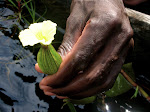
The guide squeezes this flower and it squirts water like a water pistol
Cathy and Joe Wanzala
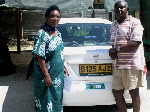
They couldn't wait to paste the Obama sticker on their car
My main man
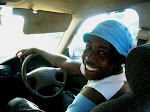
Ernest is my trusty cab driver who blasts music as we make our way through Gabs
Ted Thomas, man of intrigue and style
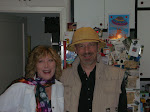
My friend, Ted, and his wife, Mary Ann, hosted a Safari Send-Off for me in Austin and treated me to a special mix of African music that already a UB student and a professor want to download.